SPECTATOR VIEW
Turning game spectators into participants.
Wildcard · UI/UX Director · Product Design · Interaction · Motion
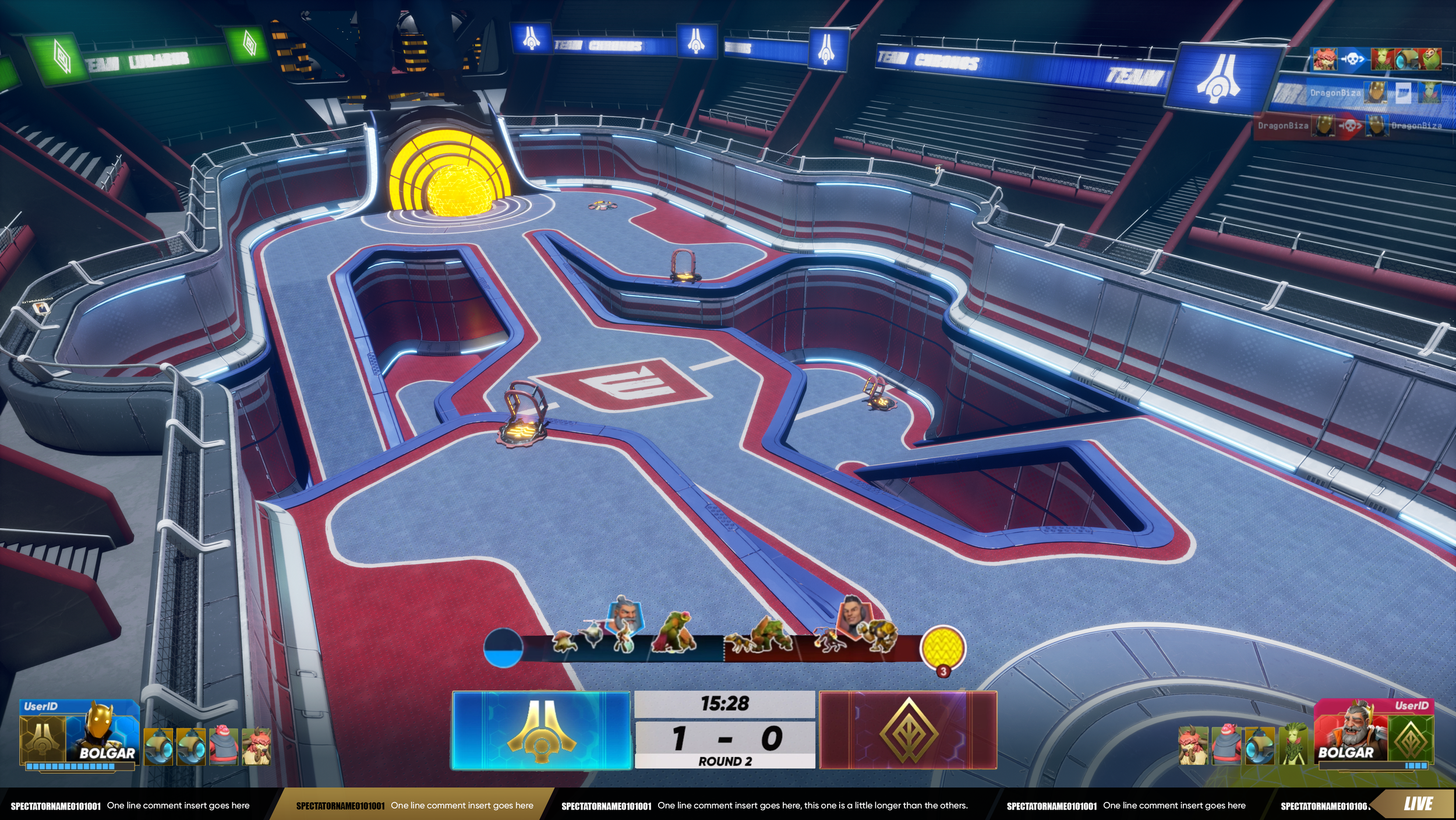
Wildcard's Spectator View was designed to make watching a competitive match feel less like watching a screen and more like being inside a live sporting event.
I designed an interactive viewing experience that gave spectators control over what they watched, insight into what was happening on the field, and ways to influence the energy of the match.
ROLE
UI/UX Director
SCOPE
UX · UI · Interaction · Motion · Systems · Implementation
TEAM
Design · Engineering · Production · 2 Outsource Artists
The Challenge
How do you make watching a game feel like being at the game?
We wanted spectators to experience a Wildcard match with the energy and excitement of a live sporting event—but sitting in front of a monitor or TV creates a natural disconnect between the viewer and the action.
The challenge was to use the interface itself to close that gap.
What information does a spectator actually need? How should they understand what's happening across the entire field? How can they interact with other spectators? How can we give them agency that wouldn't be possible from the stands?
Rather than treating spectators as passive viewers, I wanted the interface to make them participants in the experience.
Designing For A Spectator
A player has direct control over the action. A spectator doesn't.
That meant the interface needed to give spectators a different kind of agency: the ability to understand, choose, react, and influence.

My Approach
I designed the spectator experience around six interconnected systems.
01 - Creature Bar

UX Problem
Because spectators aren't controlling a character, they need a way to build a mental model of the match without constantly relying on the camera view.
02 - Player Profile
Give the spectator a persistent connection to the players.

Player Profiles establish the two competing teams and provide a persistent connection to the players on the field.
The system was designed to scale beyond a single player representation, allowing additional players to be introduced while maintaining a consistent team structure.
03 - Momentum
Turning match state into something spectators can feel.

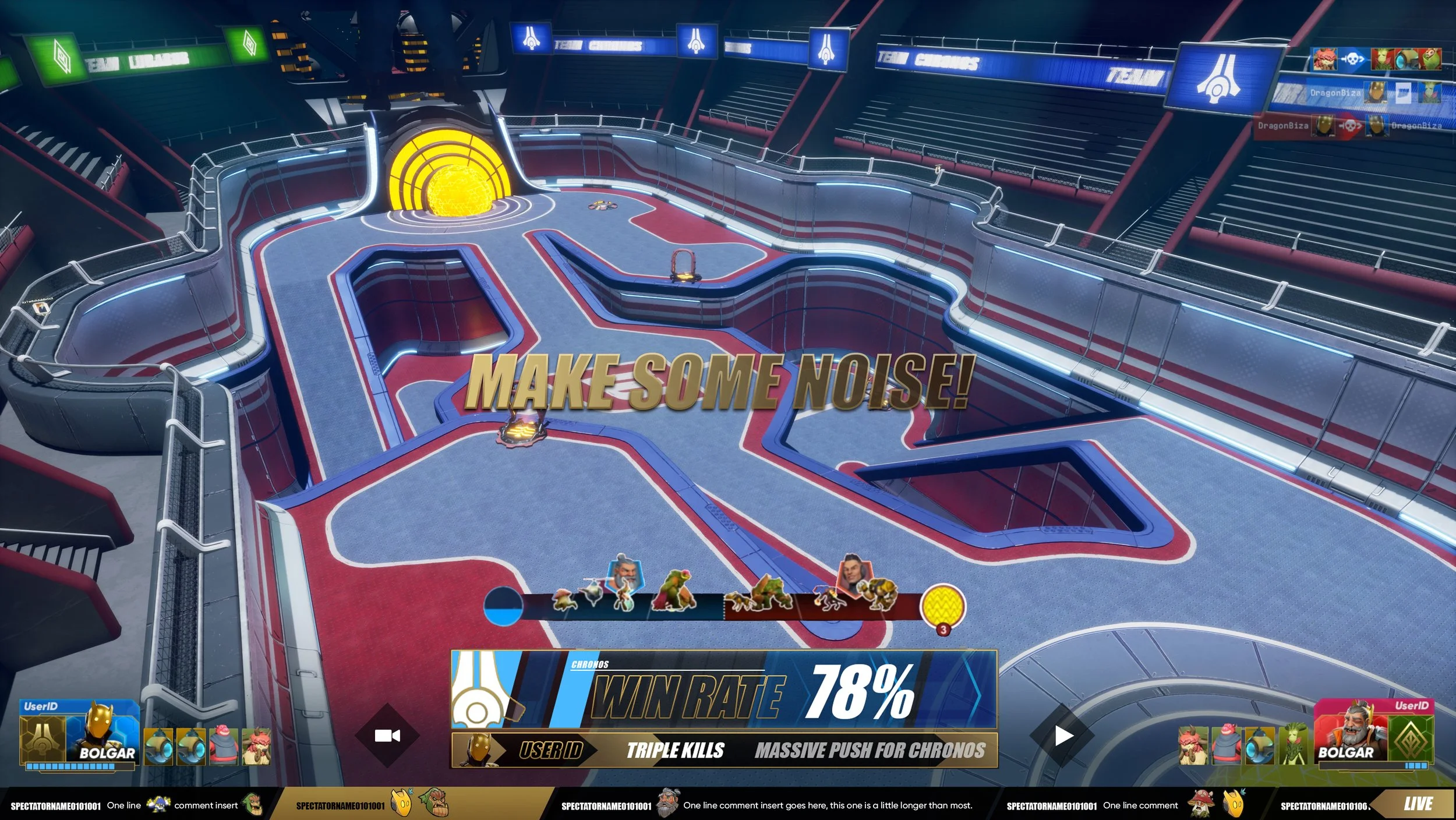
The Momentum Meter translates a constantly changing set of gameplay events into a simple visual representation of which team currently has the advantage—and why.
Momentum wasn't intended to be just another statistic. It was designed as a bridge between what was happening on the field and the atmosphere surrounding it.
A shift in momentum could drive stadium chants, arena lighting, and other visual changes—allowing the spectator's understanding of the match to become part of the atmosphere.

04 - Spectator Interaction
Giving spectators a voice.

We wanted spectators to feel connected to one another rather than isolated behind individual screens.
I restructured the traditional chat experience into a broadcast-style ticker where spectators could communicate using text and emojis.
Paid Messages
Spectators could spend in-game currency to move their message toward the front of the queue, creating a lightweight interaction economy around the broadcast.
Emojis in the Stands
Emoji reactions weren't limited to the interface. They could also appear as 2D sprites within the stadium, allowing spectators to see the collective reaction of the audience from the spectator's point of view.
05 - Cheer Meter
Turning spectator participation into gameplay atmosphere.
At key moments during a match, the Cheer Meter would appear and give spectators an opportunity to rally behind their team.
Interaction from spectators would push the meter toward either Red or Blue. The louder team would gain momentum, which could then influence the stadium atmosphere and on-field visuals experienced by the players.

The goal was to create a feedback loop between the people watching and the people playing—bridging the physical distance created by the screen.
06 - Camera + Instant Replay
Giving spectators something they can't have in a real stadium: control.

One Experience
Reflection
The most important lesson from the project was that spectators didn't need to be given more information—they needed to be given more agency.
By giving spectators control over their viewpoint, ways to understand the match, ways to interact with other spectators, and opportunities to influence the atmosphere, Spectator View could become more than a way to watch a game.
The goal was to make watching feel like participating.