PLAYER EXPERIENCE
Designing the player experience beyond gameplay.
Orcs Must Die Unchained · UI/UX Lead · Product Design · Interaction · Motion
As UI Lead for Orcs Must Die! Unchained, I owned the non-gameplay UI experience, redesigning the existing dashboard and creating the systems players used to select characters, configure their kits, manage progression, acquire items, and prepare for gameplay.
ROLE
Lead UI Artist
SCOPE
UX · UI · Interaction · Motion · Systems
TEAM
Design · Engineering · Production
The Challenge
Designing everything that happens before the player enters the match.
Orcs Must Die! Unchained wasn't just a game played inside a match. Before entering gameplay, players needed to make a series of decisions: What character should I play? How should I configure my kit? What do I own? What can I upgrade? What should I buy? What mode do I want to play?
The challenge was to turn all of those separate systems into a cohesive player experience rather than a collection of disconnected menus.
My Approach
Designing around the player's journey.
Because the game was live, I had to be careful about designing in a way that would update the player journey in a better, more meaningful way, without breaking what was already there. I ingested the experience as a whole, and then broke down the sections in parts that would need an overhaul.
The Dashboard
Creating the player’s home base.
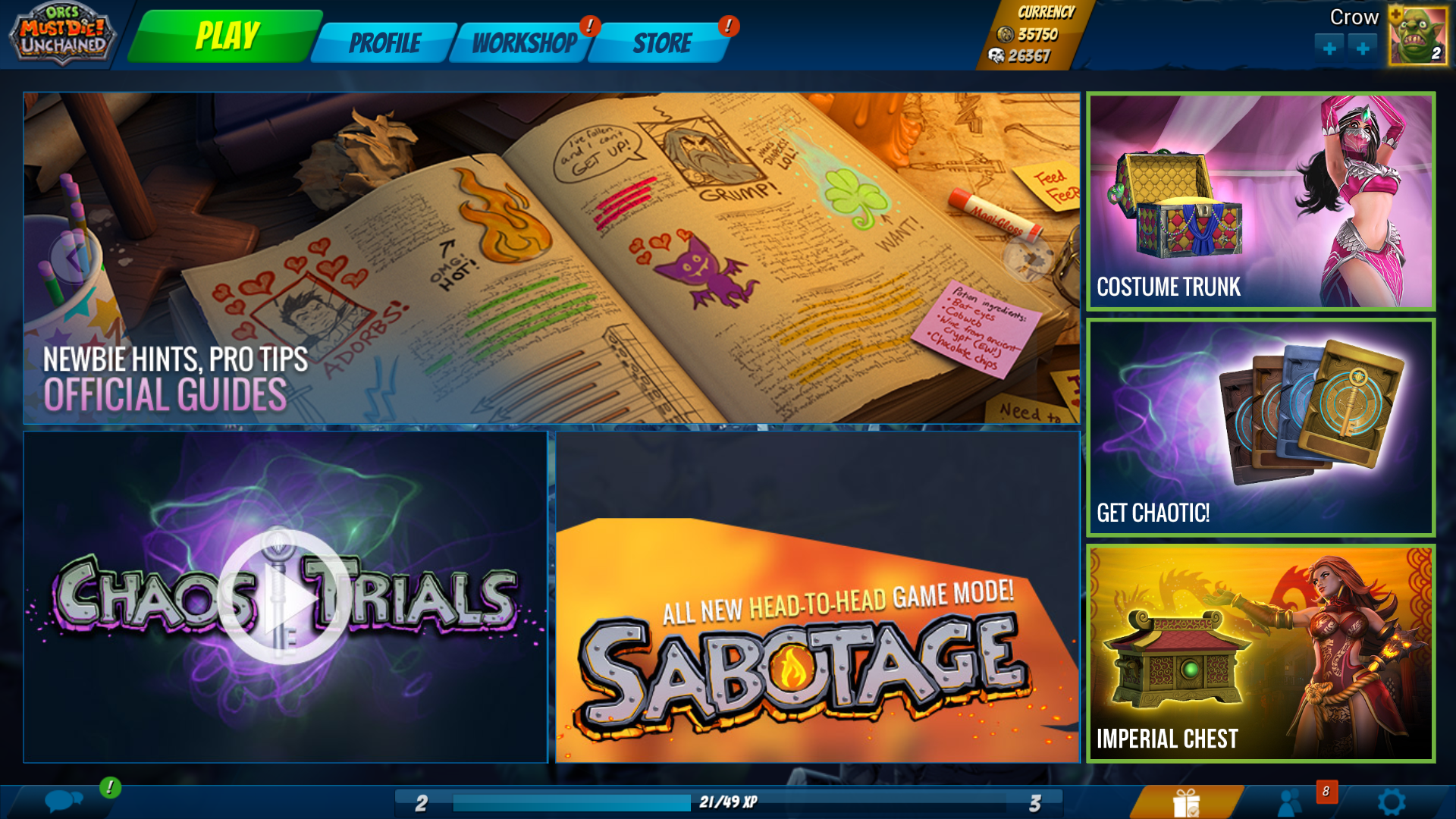
The Dashboard became the central hub for the player's experience. Rather than treating each feature as a separate destination, I designed the navigation and hierarchy around the actions players would most frequently take between matches.
Character Select
Choosing a Character is only the first decision.


Workshop
Turning progression into a system players could understand.

The Workshop extended the player journey beyond simply acquiring items. Players could upgrade and craft traps, creating a system that needed to communicate both what they owned and how those items could evolve.
Store
Making acquisition part of the overall experience.

The Store was designed as another part of the player's progression loop, connecting acquisition with the systems players were already using to configure and improve their characters.
Chest Opening
Designing anticipation into the reward experience.
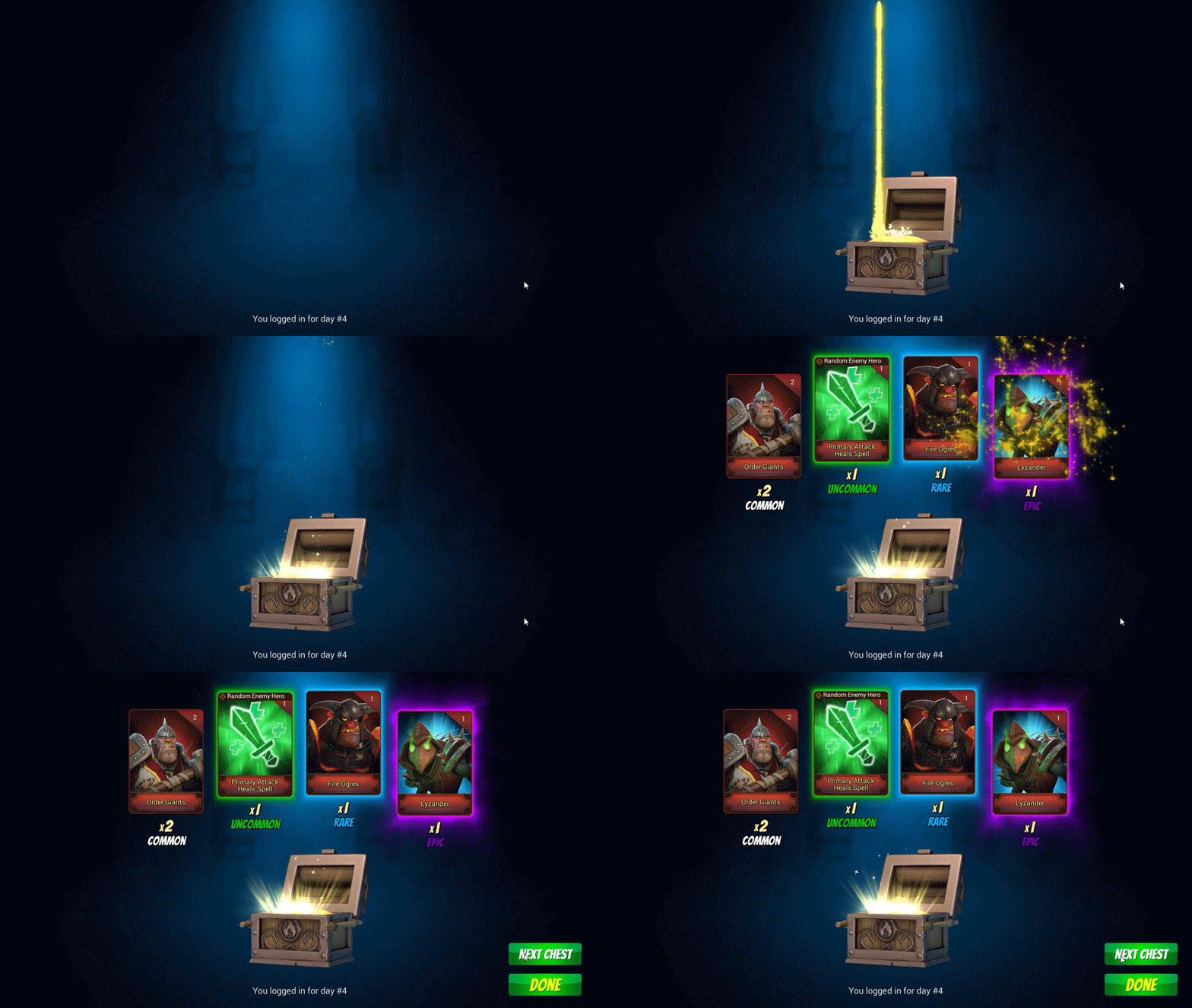
The chest opening sequence was designed as a moment of anticipation rather than simply a transactional reward screen.
Motion and reveal timing were used to build a sense of progression and make the contents of the chest feel meaningful.
Survival Mode
Giving players control over the challenge.
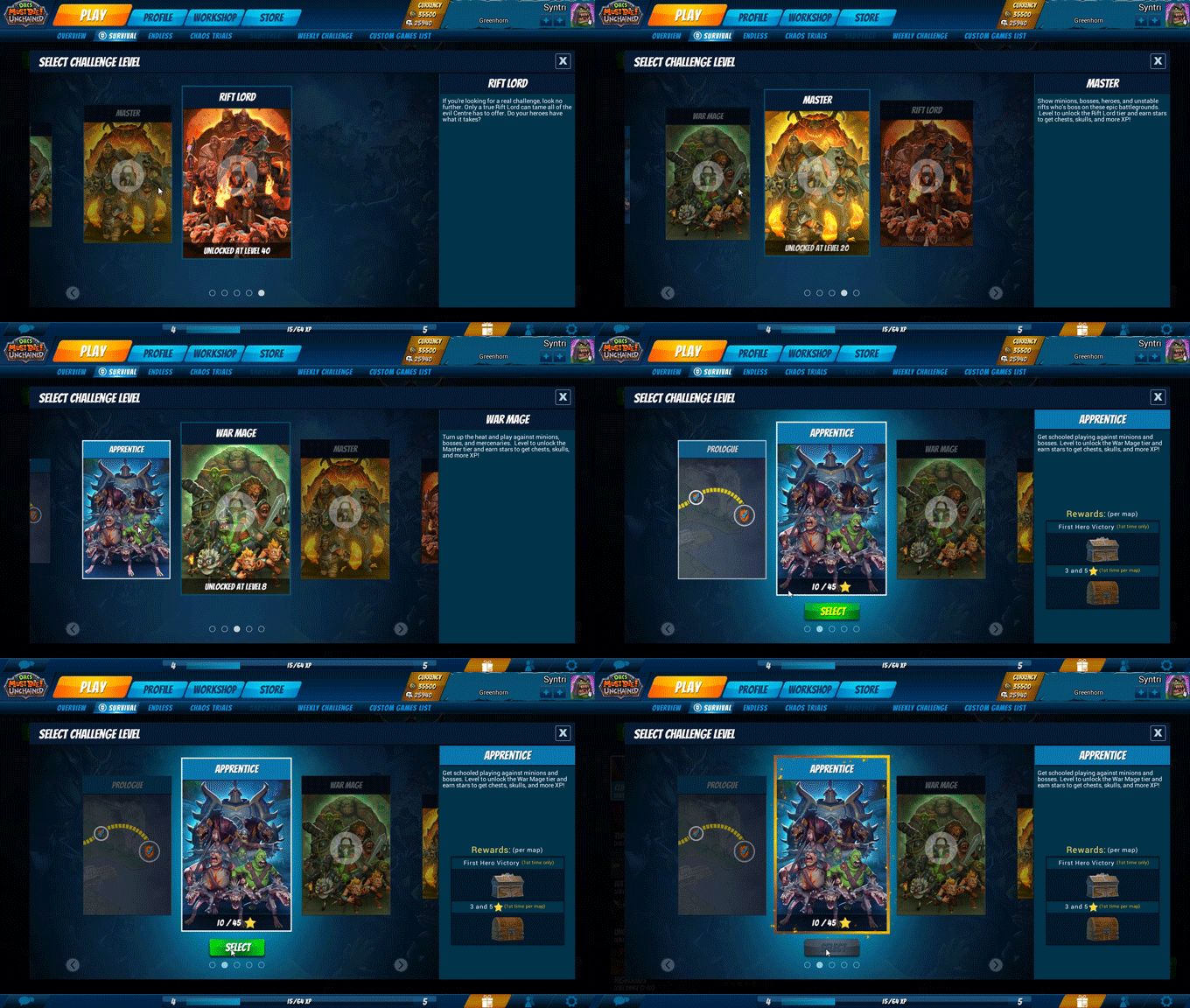
Survival Mode required a simple way for players to define the experience they wanted to play. The interface needed to make difficulty and level selection understandable without adding unnecessary friction.
Systems, Not Screens
The challenge wasn't designing each screen independently. It was creating a consistent visual and interaction language that allowed players to move between systems without having to relearn how the interface worked.

The goal was to create a feedback loop between the people watching and the people playing—bridging the physical distance created by the screen.
From Design to Implementation
I worked directly with dashboard programmers to bring the interface into Unity, translating visual designs and animation into working interactive systems while collaborating on the underlying functionality.

Reflection
A player's experience is bigger than the game itself.
The most important part of this project was understanding that the player experience didn't begin when the match started.
Character selection, kit configuration, progression, crafting, acquisition, and mode selection all shaped how players approached the game.
My goal was to make those systems feel like parts of one cohesive experience—giving players the information and tools they needed to make decisions while keeping the path into gameplay clear and engaging.